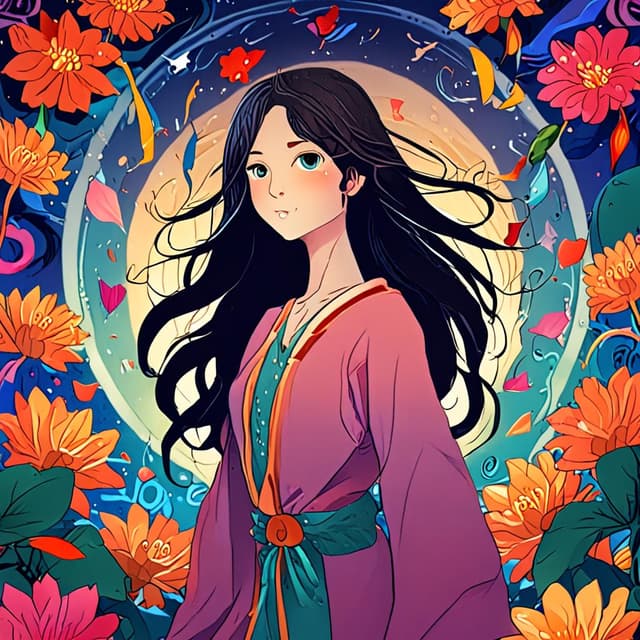
| Debut | 2005 |
| Genre | Fantasy • Anime • Drama |
| Title | Every Flower Shall Once Blossom |
| Themes | Political intrigue • Spiritual awakening • Fight for freedom • Oppressive regime |
| Setting | The mystical realm of Xing |
| Reception | Critically acclaimed, devoted international following |
| Main characters | Sorcerers • Spirits • Rebels • Imperial agents |
| Notable features | Rich world inspired by East Asian mythology • Nuanced storytelling • Visually stunning animation |
"Every Flower Shall Once Blossom" (original Japanese title: 一花必開 Ichika Hitsurai) is a Japanese animated fantasy television series that has gained a devoted global following since its debut in 2005. Produced by the renowned Studio Ghibli and directed by Makoto Shinkai, the series is set in the mystical realm of Xing, a land inspired by the cultures and mythologies of East Asia.
The world of Xing is a sprawling, richly imagined realm characterized by its diverse landscapes, ancient mystical traditions, and powerful spirit beings. At the heart of the story is the Xian Empire, a vast autocratic regime that ruthlessly suppresses the magical and religious practices of its subjects. Opposing the empire are various factions, including rebel groups, independent sorcerers, and clans of nature spirits, each with their own beliefs, abilities, and agendas.
The series draws extensively from East Asian philosophy, folklore, and aesthetics, weaving elements of Taoism, Buddhism, Shintoism, and ancient Chinese cosmology into its fantastical setting. Locations range from bustling imperial cities to remote mystical forests, each with their own distinct visual styles, cultural traditions, and supernatural phenomena.
"Every Flower Shall Once Blossom" follows an ensemble cast of characters whose intertwining stories drive the series' complex, multilayered narrative:
As the characters navigate the web of political intrigue, spiritual awakening, and open conflict, they are forced to confront the moral complexities of their choices and the nature of power, oppression, and resistance.
"Every Flower Shall Once Blossom" has been praised by critics for its nuanced storytelling, complex thematic exploration, and visually stunning animation that seamlessly blends traditional East Asian art with cutting-edge CGI techniques. The series has gained a devoted cult following, particularly in Japan, China, and other parts of Asia, where it has been hailed as a landmark work of fantasy television.
Beyond its popularity, the series has also been recognized for its cultural significance, with academics and commentators applauding its rich engagement with East Asian philosophies, mythologies, and social/political issues. The series' portrayal of strong, complex female characters and its treatment of themes like imperialism, religious oppression, and environmental stewardship have also drawn praise from feminist and eco-conscious viewers.
Since its debut, "Every Flower Shall Once Blossom" has spawned multiple seasons, OVAs, and a feature film, cementing its status as one of the most ambitious and acclaimed fantasy television franchises of the 21st century. Its influence can be seen in the growing popularity of East Asian-inspired fantasy stories across various media, as well as in the continued evolution of Japanese animation as a medium capable of tackling sophisticated, adult-oriented themes.
